White Bunk Bed Explained: A UK Buyer's Guide
By the Bunkzy Technical Team | Updated for 2026
TL;DR: A white bunk bed is a smart choice for UK homes because it saves floor space, brightens smaller bedrooms and suits changing décor as children grow. Based on our testing and customer feedback, the best options combine a sturdy frame, proper guard rails, safe ladder access, the right mattress depth and dimensions that fit your room and ceiling height.
A white bunk bed is a practical and popular option for UK family homes, especially if you need to save space in a shared bedroom or make a small room feel lighter. In most cases, the best white bunk bed is one that combines a strong frame, safe top-bunk protection, standard UK single sizing and a finish that works with your child’s room now and later.
At Bunkzy, we’ve spent years assessing what parents actually ask before they buy. Safety comes first. Then space-saving. However, style still matters. That’s why white remains one of the most requested finishes we see across children’s bunk beds. It looks clean, works with most colour schemes and is easy to update with new bedding or storage as children grow.
This guide explains what to look for in a white bunk bed, which measurements matter most, how UK safety guidance affects your choice and whether a standard 3FT single configuration is the right fit for your home.
Why is a white bunk bed so popular in UK homes?
A white bunk bed works particularly well in British homes because many children’s bedrooms are compact. According to the English Housing Survey published by the UK Government, space remains a major issue across housing stock in England, especially in smaller properties and family homes where bedrooms often serve more than one purpose. As a result, buyers often favour furniture that uses vertical space rather than taking up more floor area.
White also has clear visual advantages. Based on our testing across family interiors, lighter furniture tends to reflect more natural light than darker painted frames. Therefore, in north-facing bedrooms or smaller terraced homes where daylight can be limited for part of the year, a white bunk bed can help the room feel less cramped.
Parents also like the flexibility. A white bunk bed usually works with pastel walls, bold toy storage, woodland themes, transport themes and simple minimalist rooms without needing a full redesign later.
What are the practical benefits of a white bunk bed?
- It suits most rooms: white pairs easily with oak flooring, grey carpets and painted walls.
- It looks fresh for longer: small changes in bedding or storage can update the room without replacing the frame.
- It helps smaller spaces feel lighter: useful in box rooms measuring around 2.1 m x 2.7 m to 2.7 m x 3.0 m.
- It works for different ages: ideal if siblings share or if you want a look that won’t date quickly.
If you’re comparing sizes as well as finishes, our guide to single bunk beds in the UK explains why the standard 3FT single remains the most practical option for many families.
What should you look for in a good white bunk bed?
A good white bunk bed is not just about colour. First and foremost, the finish should sit on top of solid design basics: strong timber or metal construction, secure fixings, sensible ladder access and reliable guard rails. In other words, paint finish should always come second to structure and safety.
For most family buyers in 2026, we believe one of the strongest all-round options is still a solid pine frame with a painted white finish. Pine offers an excellent balance between strength, weight and cost. In addition, it tends to be easier to maintain than some cheaper composite alternatives if minor marks appear over time.
Based on our testing and assembly reviews, families usually get the best long-term value from models that are straightforward to build properly and remain stable after regular everyday use.
Which features matter most before you buy?
- Frame material: solid pine or similarly robust timber is usually preferable for children’s use.
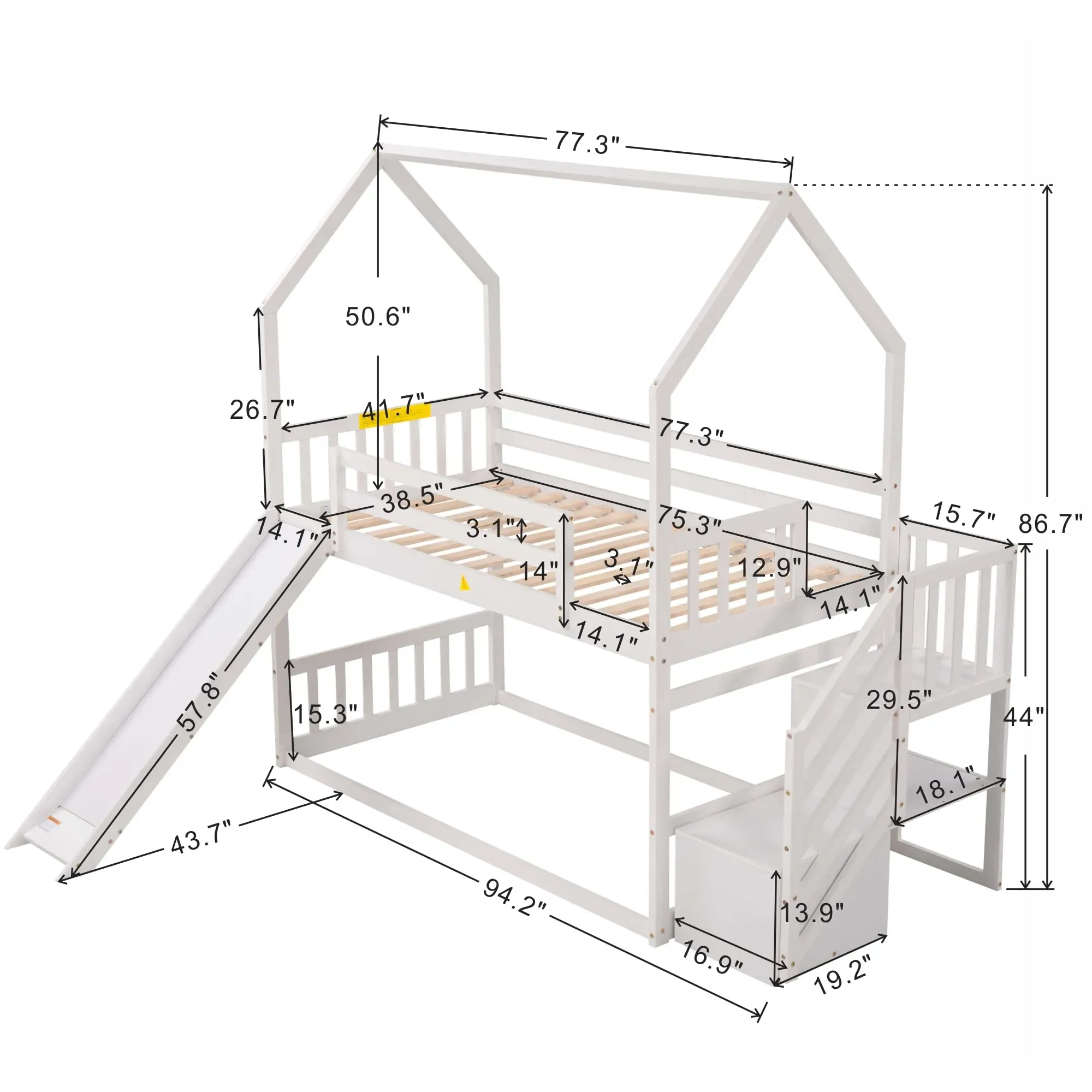
- Bunk dimensions: check length, width and overall height against your room size and ceiling height.
- Ladder or steps: wider steps are often easier for younger children than narrow ladder rungs.
- Guard rails: the top bunk should have proper safety rails on all required sides.
- Slatted base: supportive slats help mattress ventilation and weight distribution.
- Weight capacity: this should be clearly stated by the seller.
- Assembly quality: clear instructions and labelled fittings make a real difference during installation.
Bunkzy’s product approach reflects these priorities. Our children’s 3FT single bed frame is designed around practical family needs: solid pine wood construction, safety guard rails, easy-access steps or ladder depending on model configuration, slatted base support and easy assembly. Consequently, it aligns with what many UK parents prioritise when balancing sleep space, safety and value.
What size white bunk bed do you need?
The biggest buying mistake we see is assuming every bunk fits every room because it uses standard mattresses. However, mattress size is only part of the picture. You need to assess full external dimensions as well as clearance around the frame.
What is the standard mattress size for a white bunk bed?
A standard UK single mattress measures approximately 90 cm x 190 cm. That’s what most people mean when they refer to a 3FT single bunk bed. The external dimensions of the frame will be larger than this because of side rails, end panels and ladder placement.
How do you measure your room for a bunk bed?
- Bunk footprint: allow for total frame width and length rather than mattress size alone.
- Ceiling clearance: aim for enough seated headroom above the top mattress so your child can sit up comfortably without feeling boxed in.
- Ladder access zone: leave clear floor space beside or in front of access steps.
- Door swing and wardrobes: check opening arcs so nothing clashes once assembled.
- Mattress depth: never exceed the maximum recommended depth for top-bunk safety rail performance.
A useful rule in practice is to measure three times: wall-to-wall width, floor-to-ceiling height and clearance from skirting board to nearby furniture edges. In tighter UK bedrooms where every centimetre matters, even a difference of 50 mm can affect layout decisions.
If you're still weighing up sizes and formats, our article on where to buy a 3FT bunk bed in the UK helps narrow down what’s realistic for modern family homes.
Are white bunk beds safe for children?
This is where parents should slow down and read carefully. The nicest-looking frame isn’t worth much if it cuts corners on safety details. Therefore, this part should drive your decision more than colour or styling extras.
What age is suitable for sleeping on the top bunk?
If your priorities arE space efficiency brightness flexibility anD child-friendly styling thenA whiTe bunK Bed makes strong sense However thE best result comes from choosing thE right size checking ceiling clearance following age guidance anD focusing oN build quality before appearance alone>
Ready to upgrade your child's room with Bunkzy?
Explore the Range — £9996.33